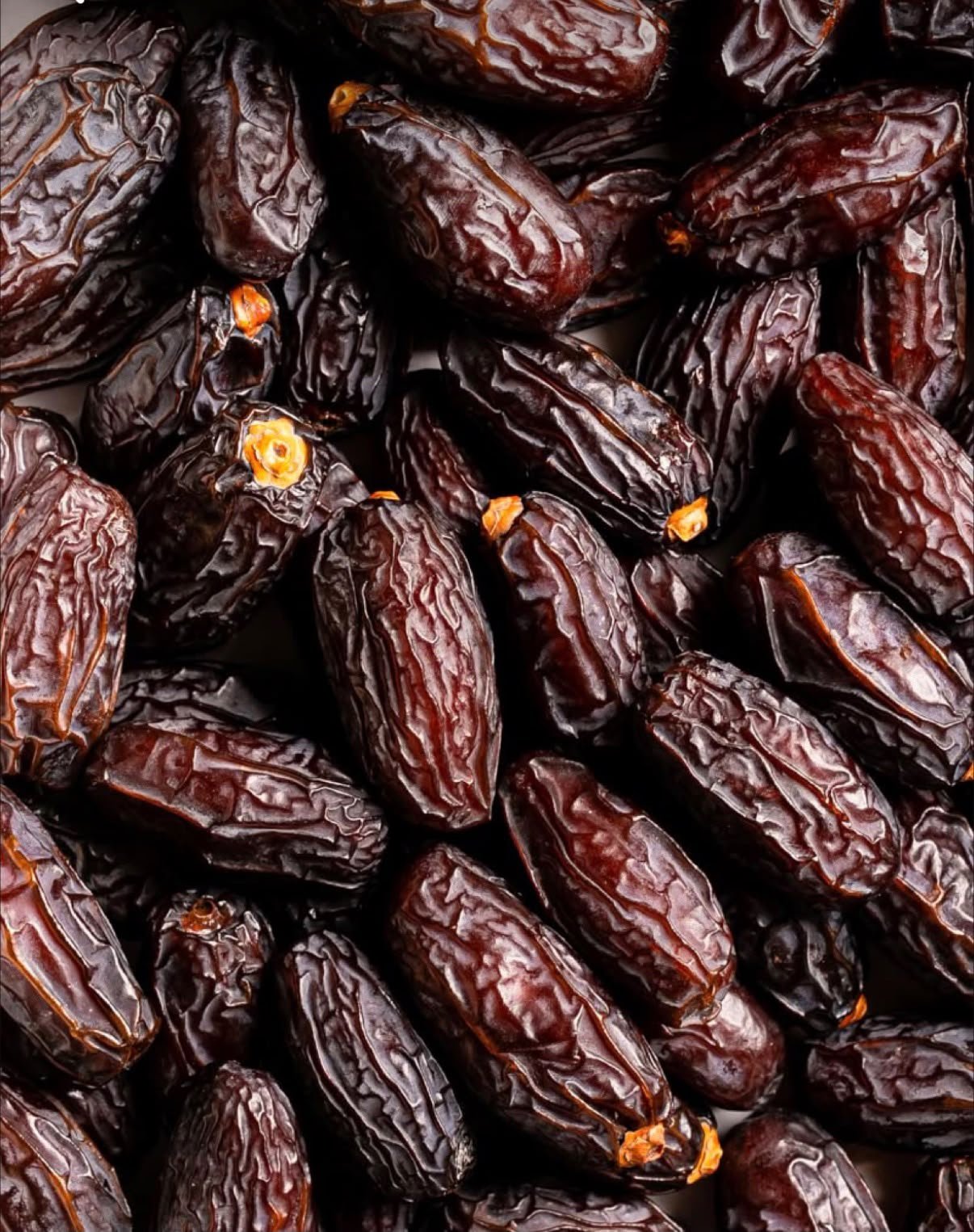
Benefits of Dates (Khajoor): Nutrition Explained
Dates – called tamr in Arabic and khajoor in Urdu and Hindi – have been a staple food in the region for thousands of years. Here is what they offer nutritionally.
Key nutrients in dates
- Dietary fibre – supports digestion and helps you feel full.
- Potassium – dates are a good source; potassium is important for muscle and nerve function.
- Natural sugars – glucose and fructose provide quick energy, which is why dates are traditional for breaking a fast.
- Minerals – including magnesium, copper and manganese.
- Antioxidants – such as polyphenols, especially in darker varieties.
How many dates should you eat a day?
Dates are nutritious but energy-dense. For most healthy adults, a few dates a day fits well into a balanced diet. Two to three Medjool dates or around five to seven smaller dates such as Ajwa is a common portion. People managing diabetes or blood sugar should ask their doctor about portion sizes.
Medjool vs Ajwa nutrition
Both are similar per gram. Because a Medjool date is much larger, one Medjool contains more calories and sugar than one Ajwa. See Medjool vs Ajwa.
Easy ways to enjoy dates
- Stuffed with almonds, walnuts or tahini
- Blended into smoothies or date milk
- Chopped into oats and salads
- With Arabic coffee – the classic pairing for Segai dates
This page is general information, not medical advice.
Frequently asked questions
Are dates healthy?
Dates provide fibre, potassium, minerals and antioxidants, but they are high in natural sugar, so enjoy them in sensible portions.
What is khajoor?
Khajoor (or khajur) is the Urdu and Hindi word for dates.
Can diabetics eat dates?
Many people with diabetes can include small portions of dates, but they should follow their doctor's advice.
Order premium dates in the UAE
Tell us who the gift is for, the occasion and your message, and we will prepare a personalised box for you.